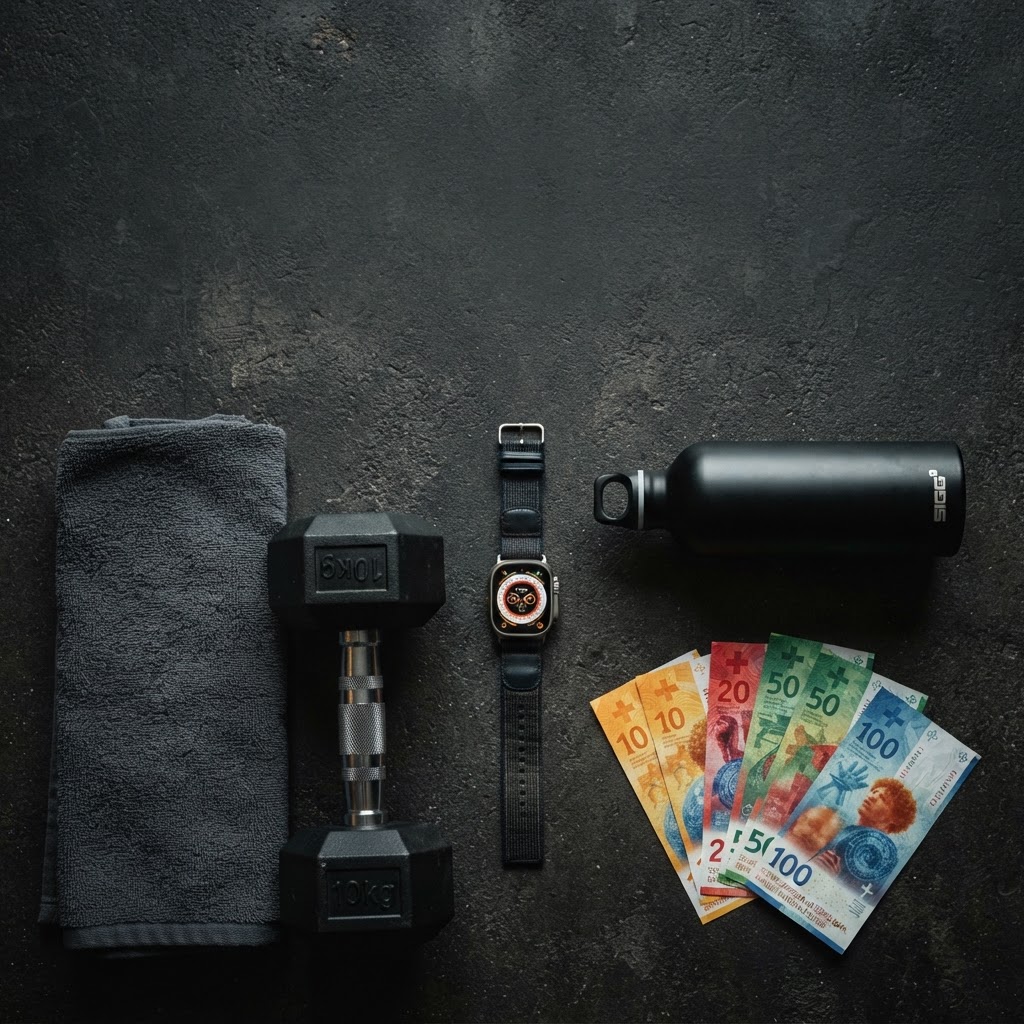
A gym membership in Switzerland costs around CHF 93 per month on average (vyvo database, 2026). That is more than in Germany or Austria, yet the price alone says little about what you actually receive for it. What matters is what lies behind the figure.
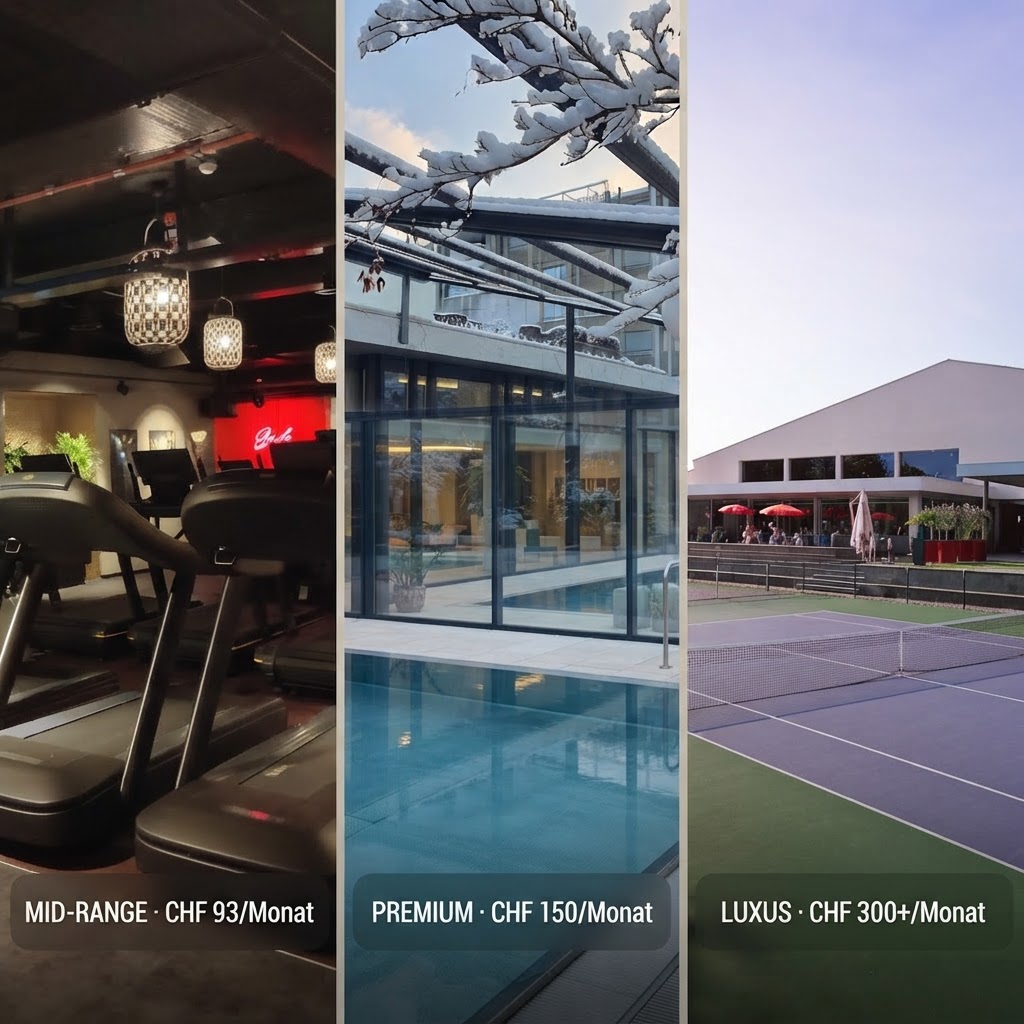
In this overview we compare three price levels: the segment around the average of CHF 93, a mid-range premium level around CHF 150, and a high-quality segment around CHF 300 per month — in the vyvo database, only a few clubs reach this peak. For each level we explain which selection of equipment, classes and support is typically included.
By the end of this text you will be able to judge which price level suits your usage, how to assess the premium for a high-end offer, and how subsidies affect your actual annual costs.
Why does a Swiss fitness centre cost more than one in Germany or Austria?
The Swiss population trains above average, and the market is correspondingly large. According to the vyvo database — 139 fitness centres in Switzerland, 65 in Zurich — the average monthly membership is around CHF 93, while comparable offers cost about CHF 49 in Germany and about CHF 52 in Austria.
This difference is linked to the higher level of wages and rents in Switzerland and to the quality standards that many centres aim for. Compared with disposable income, however, the share spent on a membership works out similar to that in neighbouring countries.
Membership numbers have risen sharply since the pandemic and have reached record levels. A growing market means more choice, but also larger price differences between individual types of centre.
What do you get for around CHF 93 per month?
At the level of the Swiss average, you usually receive a solid, well-equipped fitness centre. The focus is on a reliable core offer that is sufficient for most training goals.
Typical of this segment are:
- —Access to strength and cardio equipment in sufficient quantity
- —A basic range of group classes at fixed times
- —Changing rooms, showers and in some cases a sauna area
- —Longer opening hours, frequently including weekends
- —A basic introduction to the equipment at the start
What often lacks at this level is close personal support. Personal training is usually bookable as a paid additional service, not included in the membership. Anyone who trains independently and does not need constant guidance will find very good value for money here.
What justifies a level around CHF 150 per month?
At around CHF 150 per month you are in the mid-range premium bracket. The premium over the average usually goes into more space, more support and a broader range of classes.
This level frequently includes a larger class programme that also covers specialised formats, as well as more generous wellness facilities. Structured training support is often part of the offer, for example regular fitness assessments or a starter programme with several appointments.
Another point is capacity. Centres in this segment often manage their membership numbers, so that equipment and classes are less crowded. If you train during peak times, this can justify the premium for you.
Specialised formats such as Reformer Pilates are often offered in this or the higher segment. You will find a curated overview of offers and prices under Reformer Pilates in Zürich.
When is an offer around CHF 300 per month worthwhile?
At the level around CHF 300 per month you are buying less a fitness centre than a comprehensive support package. This segment is aimed at people who expect individual guidance and a high-quality environment.
Typical here are very personal support, in some cases with included Personal training sessions, a reduced membership circle and high-quality facilities. Additional services such as advice on nutrition, recovery or a broad wellness area frequently come with it.
The value of this level is linked to consistent use. Anyone who takes advantage of the individual support weekly is more likely to recoup the premium than someone who trains irregularly. Before signing up, it is worth asking honestly how often you will actually use the included services.
For health questions or in the case of pre-existing conditions, even intensive support at the centre does not replace a medical assessment. In such cases, speak with a specialist before starting a demanding programme.
How do subsidies lower your actual costs?
The price on the contract is not always the amount you will have paid by the end of the year. Many supplementary insurance policies contribute to the costs for a recognised fitness centre or for classes.
Some providers cover a share of the costs through a health account, at CSS for example half of the contributions up to CHF 500 per year for memberships or classes. The exact conditions and the list of recognised providers differ from one insurer to another.
Here is how to check your actual costs:
- —Clarify with your insurer which subsidies are available and which centres are recognised
- —Deduct the subsidies from the annual price, not just from the monthly price
- —Take into account additional costs for classes or Personal training that are not included in the membership
- —Compare the net amount over a full year, not the price per month
Before you sign a contract, you should also be aware of the term and notice periods. You will find an overview under Fitness contract in Switzerland.
How does vyvo help with the choice across the city?
Price levels can only be compared meaningfully if you set similar centres against one another. A premium offer in Zürich is barely comparable with a low-cost basic offer, even though both carry the same word in their name.
The vyvo Score compares clubs relative to their own city and their own category. It does not average across the whole country, but places a centre within its local environment. How this rating comes about is explained in the article How the vyvo Score is calculated.
Through the Match Finder, you find your perfect match. The selection is curated, so that you see offers at a comparable level side by side.
City-specific price overviews help with the next step. Start with the best fitness centres in Zürich, in Geneva or in Basel.
What you can do now in concrete terms
The three price levels stand for different needs, not for better or worse value in themselves. The right price is the one that suits your usage.
Proceed in this order:
- —Determine how often you realistically train and whether you need support
- —Choose the price level that suits this, not the highest or the lowest
- —Check your insurer's subsidies and calculate the net price per year
- —Compare centres at a comparable level in your city
- —Clarify the term and cancellation before you sign
Anyone who trains independently is well served by the segment around CHF 93. Anyone who values more space, a broader class programme and guidance will find a sensible middle path around CHF 150. And anyone who uses intensive, individual support weekly can justify the premium around CHF 300. fitness. decided.