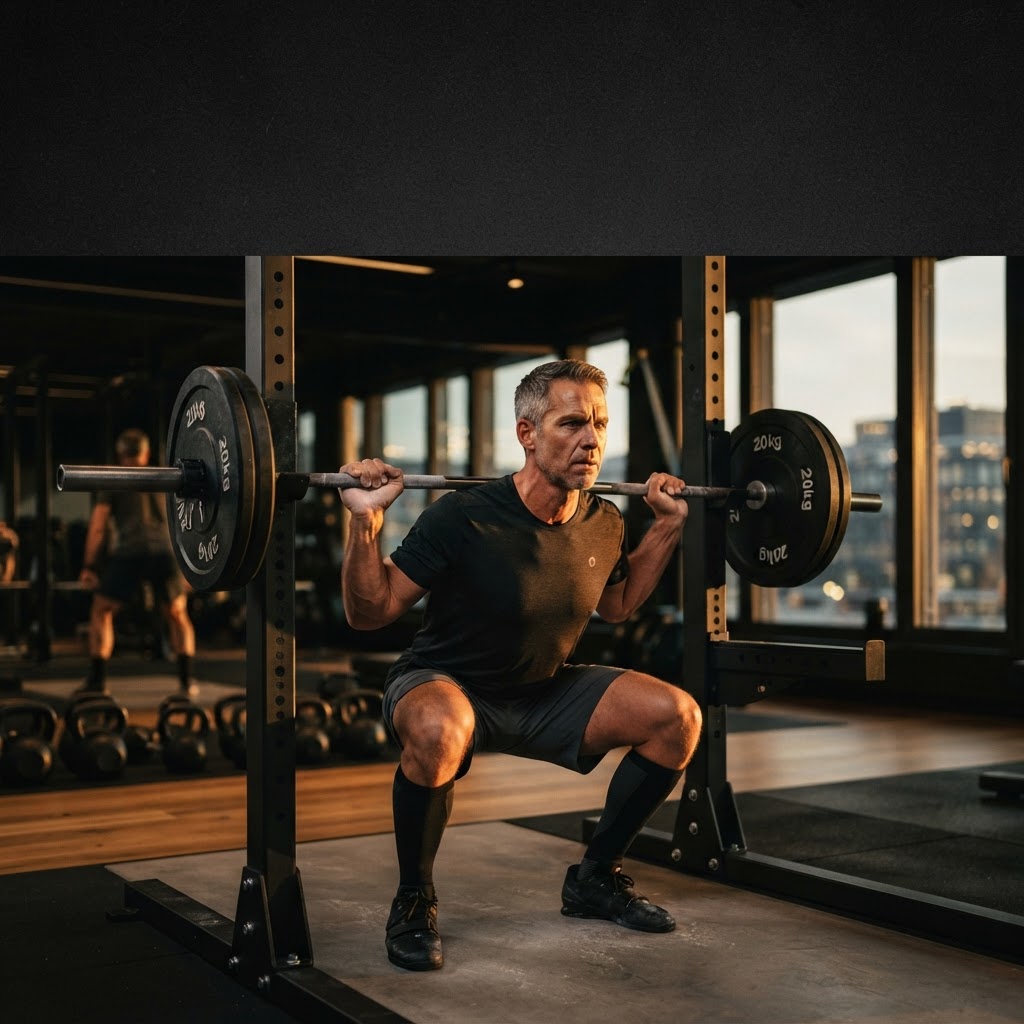
If you are over 40 and want to start structured strength training or take it more seriously, the question of the right place arises quickly. Not every fitness centre is built for the needs of the second half of life, and the differences often only become apparent after several weeks.
This overview separates what the research actually supports from what makes a sensible practical recommendation. By the end, you will be able to judge which equipment, which support and which programmes matter to you, and how to assess clubs in Switzerland on an objective, comparative basis.
One point up front: this text does not replace medical advice. If you have pre-existing conditions, take medication, or notice new symptoms, speak with a specialist before you begin.
Why Strength Training After 40 Is More Than Building Muscle
From midlife onward, the body continuously loses muscle mass without a targeted stimulus. Strength training counteracts this decline and supports strength, balance and everyday function such as rising from a chair or walking pace.
A large analysis of around 150'000 adults shows that roughly 90 to 120 minutes of strength training per week is associated with a 13 percent lower all-cause mortality and a 19 percent lower cardiovascular mortality. The combination of strength and endurance was linked to the largest risk reductions.
The benefits level off beyond around 120 minutes per week. So more is not automatically better, and moderate, regular sessions are the sensible path for most people.
What the Evidence Shows for Older Adults
A Cochrane analysis of 121 randomised trials with more than 6'700 participants demonstrates that progressive strength training increases strength, improves functional tasks and reduces pain in osteoarthritis. It is precisely these functional gains that are decisive for avoiding falls and preserving independence in later life.
Among older women, a cohort study shows a so-called J-shaped relationship: moderate weekly training times are associated with lower all-cause and cardiovascular mortality, while very high volumes remain uncertain. The effect was apparent independently of endurance activity.
Public health guidelines draw a clear conclusion from this. For adults aged 65 and over, they recommend a mix of endurance, muscle strengthening and balance, with muscle-strengthening activities on at least two days per week.
Why the Over-50s Are the Most Interesting Target Group
In Switzerland, roughly one in six people trains at a fitness centre, which puts the country ahead of Germany and Austria. Yet participation is unevenly distributed: among the over-50s it stands at around 9.4 percent, while among the under-30s it is about 19 percent.
This is remarkable, because the older group in particular is often willing to pay premium fees and stay loyal over the long term. For you as someone who trains, that means it is worth seeking out clubs that genuinely understand this target group.
The ACSM fitness trends for 2026 confirm the direction. Training for older adults and classic strength training are among the leading trends, which points to a growing supply of specialised programmes.
What to Look For Specifically at a Fitness Centre
Not every offering suits the requirements from 40 onward. The following points will help you make a curated selection:
- —Qualified staff with experience in training older adults, placing technique and controlled movements at the forefront.
- —Clearly structured, progressive programmes that gradually increase weight, sets and pace instead of throwing you in at the deep end.
- —A selection of equipment that enables safe lifting, from free weights through machines to bodyweight exercises.
- —Small-group or Personal training formats that combine individual support with a social setting.
- —Recovery offerings such as sauna and cold bath, which many in the second half of life appreciate.
- —An atmosphere that emphasises gradual progression and injury prevention rather than competition.
If you are unsure how to assess offerings objectively, the vyvo Score helps. It compares clubs relative to their own city and category, and does not form a nationwide average.
How to Build a Sensible Training Programme
The following recommendations are practical guidance, not a medical diagnosis. Adapt them to your situation and seek professional support where needed.
Begin with two sessions per week that address all the major muscle groups. Start with one to two sets of 8 to 12 repetitions at a comfortable level of exertion and slowly build up to two or three sets.
Complement strength training with endurance and balance. Around 150 minutes of moderate endurance activity per week, along with regular balance exercises, supports both longevity and fall prevention.
Pay attention to how you respond to training. If new or unusual symptoms appear, such as chest pain, dizziness or severe joint pain, pause and seek medical advice before continuing.
The Regional View: Zürich, Winterthur and Beyond
Around Zürich and Winterthur, longevity centres are increasingly opening that combine strength training with diagnostics, recovery and nutrition counselling. This is especially interesting for the over-40s who want to view their training data and health holistically.
If you live in the region, it is worth looking at the best fitness centres in Zürich. The offering is also growing in other cities, for example among the best fitness centres in Bern.
Pay attention to how seriously a club takes recovery. The topic area of sauna, cold bath and contrast therapy is a sensible criterion if you want to train sustainably and gently over the long term.
Concrete Steps You Can Take Now
Let us summarise what you should take away. A well-structured strength training programme, combined with endurance and balance, is consistently associated with better function and a lower risk of death among older adults.
- —Plan two strength sessions per week with progressive increases.
- —Choose a fitness centre with qualified staff and experience with the over-40s.
- —Review the offering of small-group or Personal training formats for individual support.
- —If you would like a protected setting, learn more about strength training and women's areas.
- —If you have pre-existing conditions, seek medical advice before starting a new programme.
Through vyvo, you find your perfect match instead of chasing them yourself. That way you can calmly find the selection that fits your life stage and your goals. fitness. decided.