1:1, Small Group or included in a premium membership: an overview of prices, formats and the choice that truly matches your goals.
What you can decide after this overview
Personal training in Switzerland is not a single product, but at least three different formats with very different prices and results. Those who understand the differences do not pay for support they do not actually need, and do not cut costs in the wrong place.
This overview compares the three common routes: classic 1:1 Personal training, the small-group format with two to four people, and coaching integrated into a premium membership. For each format you will find realistic price ranges, clear recommendations and equally clear cautions.
At the end you can decide which format suits your budget, your time frame and your goals, and what to look for when selecting a trainer.
Why demand for supported training is growing
The Swiss fitness market continues to grow, and supported training formats play a growing role within it. The key figures of the Swiss fitness economy 2025 describe a higher training frequency and emphasise the importance of Personal training as a fixed part of the offering at many centres.
At the same time, industry observers report that demand for individual support is rising, while purely digital formats and some classic group formats are losing momentum. This shift is linked to a stronger focus on prevention and measurable results.
Important for context: the exact scale of this shift is not quantified in the publicly available summaries. Comprehensive, city-by-city price lists for Personal training do not exist in any official source. The following price ranges are therefore based on published reference prices and on compared offers from partner clubs as well as independent trainers in Zürich and Geneva.
What 1:1 Personal training costs in Zürich and Geneva
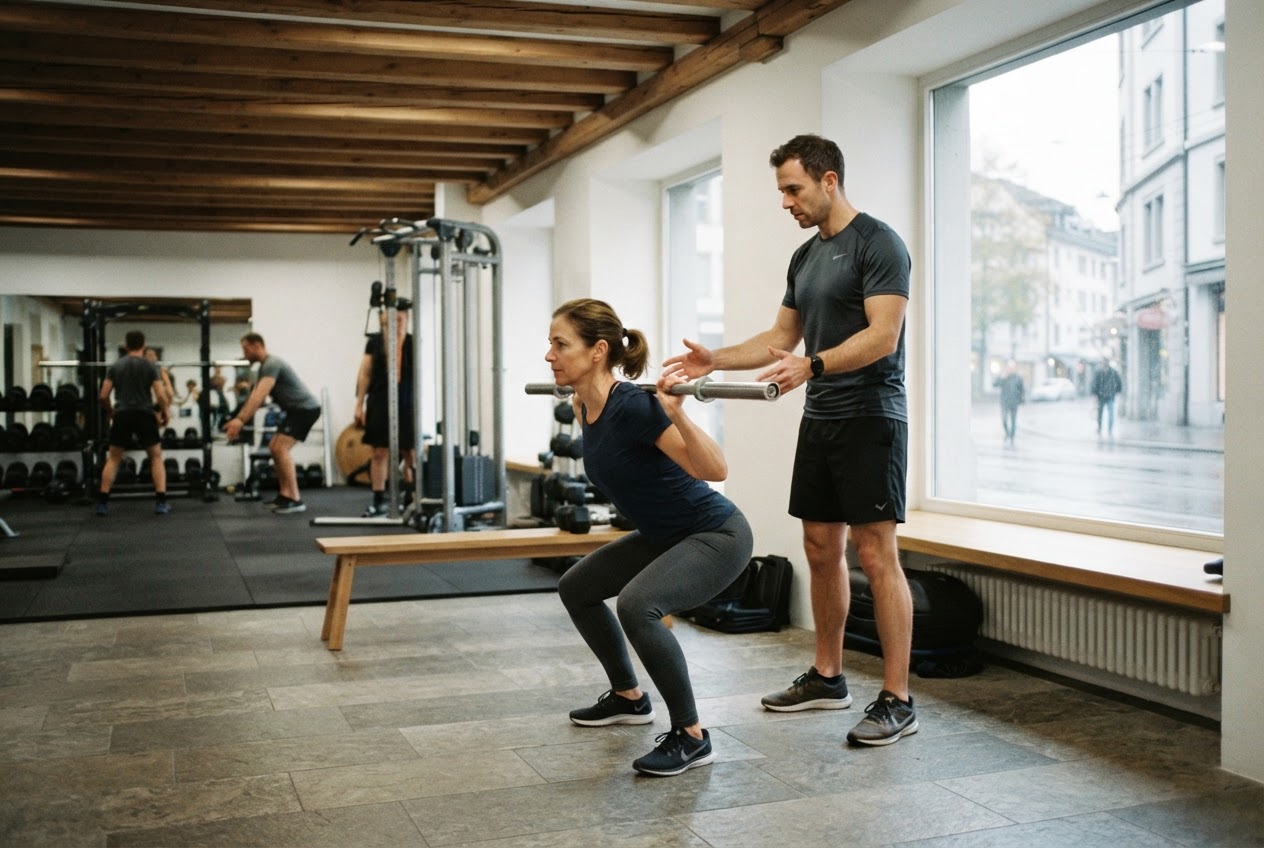
1:1 Personal training is the most intensive and most expensive format. You receive the full attention of a trainer, a plan tailored to you and direct correction on every exercise. For beginners, for specific goals or for a safe return after an injury break, this is often the most sensible starting point.
The published reference prices and the compared offers produce the following picture for a single session in the major cities:
- —Entry and standard: around CHF 120 to CHF 160 per hour
- —Experienced trainers with a specialisation: around CHF 160 to CHF 220 per hour
- —Rehabilitation-oriented or highly specialised support: from CHF 200 per hour upwards
In Zürich and Geneva, prices tend to sit at the upper end of these ranges. Packages of ten sessions usually reduce the hourly price by ten to twenty percent. Training at home is generally more expensive than at the centre, because travel and time are factored in.
When small-group training is the better choice
In the small-group format, two to four people share one trainer. You still receive individual correction, but pay considerably less per person than with 1:1 training. For many, this is the most economically sensible compromise between support and price.
Per participant, prices often range between CHF 40 and CHF 80 per session, depending on group size, location and trainer. The smaller the group, the higher the price per person, but the more precise the support.
This format is particularly suitable if you take part with fixed training partners, if a certain degree of exchange motivates you and if your goals are similar in nature. You can find more on the advantages and disadvantages of this format in our article on the benefits of small-group Personal training.
When coaching within a premium membership is already enough
Many premium centres integrate a form of coaching directly into the membership. This ranges from a structured introduction through regular assessments to a limited number of supported sessions per month. For advanced members who train independently and only need occasional correction, this can be entirely sufficient.
The advantage lies in predictability: the support is included in the monthly fee, and you do not pay separately per hour. The disadvantage is that the scope is limited and the coaching rarely goes as deep as dedicated 1:1 training.
Before signing up, check carefully what "included" specifically means, how many sessions are covered and what qualifications the supervising staff bring. For an overview of general membership price ranges in Switzerland, see our article on what a fitness membership costs.
What to look for when selecting a trainer
Price says little about quality. What matters is qualification, experience with your specific goal and the question of whether the chemistry is right. A higher hourly fee does not guarantee a better result without qualified support.
When selecting, pay attention to the following points:
- —Recognised training and demonstrable qualification
- —Experience with your specific goal, such as strength building, weight management or returning to training
- —Transparent prices including package and cancellation terms
- —A free or low-cost trial session before you book a package
- —Clarity about where the training takes place: at the centre, at home or online
An important note: Personal training does not replace a medical assessment. If you have pain, a pre-existing condition or an injury, have this assessed by a doctor or physiotherapist before you begin an intensive programme. A good trainer will ask exactly about this and, in case of doubt, refer you to a specialist.
How to find the right format and centre
Instead of phoning dozens of centres yourself, many users rely on a curated selection. On vyvo, centres are compared and classified with the vyvo Score. This score compares centres relative to their own city and category and does not form a national average.
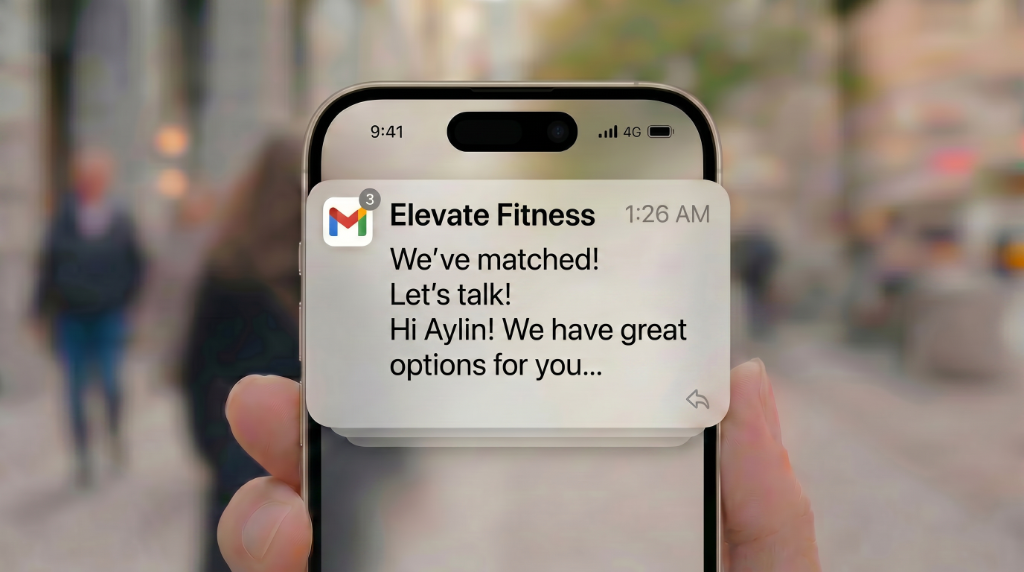
This is how the process works in practice: you record your preferences via the Match Finder, and suitable clubs reach out to you. You therefore do not need to chase after the clubs, as the contact comes in your direction.
You can find a curated overview of the best centres, for example, for fitness centres in Zürich and fitness centres in Geneva. If you would like to get started directly, you can compare clubs.
Concrete takeaways for your decision
Anchor your decision in these three questions. First: how much support do you really need? Beginners and people with specific goals benefit from the 1:1 format, even though it costs the most.
Second: how price-sensitive are you? Small-group training significantly lowers the cost per person and retains a lot of individual correction. Advanced members who train independently are often best served by the coaching included in a premium membership.
Third: are qualification and transparency right? Compare offers, book a trial session and check package terms before you commit. In Zürich and Geneva, expect around CHF 120 to CHF 220 per hour for 1:1, and CHF 40 to CHF 80 per person and session for small group. That way you make an informed choice instead of an expensive guess.