What you can decide after this overview
A smartwatch on your wrist today collects steps, heart rate and sleep. Yet the number of devices says little about whether your fitness club translates this data into meaningful training. This is exactly where simple equipment separates itself from genuine measurement competence.
This article shows you which objective tests a premium fitness club can actually offer, what the evidence on wearables truly demonstrates and what remains only a sensible recommendation. By the end, you will be able to judge whether an offering turns your measured values into a structured plan or merely delivers attractive graphics.
Along the way, you receive a curated selection of criteria with which you can compare clubs and find the right support for your goals.
Why measurement technology moves from trend to standard in 2026
The American College of Sports Medicine (ACSM) lists Wearable Technology as the number one global fitness trend for 2026. This is no coincidence, but reflects an ongoing shift from pure activity display towards integrated coaching tools.
In parallel, the industry describes the theme of technology and the so-called "digital twin" as a defining development for fitness clubs. The idea: a representation of your body that makes progress and recovery visible.
What is decisive, however, is how this data is used. The evidence clearly shows that devices unfold their value above all when they are combined with professional guidance, goal setting and feedback.
Which objective tests a premium club offers
A watch estimates, a professional test measures. You will increasingly find the following procedures as a fixed offering in well-equipped Swiss fitness clubs.
- —InBody and bioelectrical impedance analysis: a quick estimate of muscle mass, body fat and fluid balance. Ideal for tracking trends over weeks, less suitable for individual daily values.
- —DEXA scan: one of the more accurate methods for determining body composition and bone density, usually available in cooperation with medical partners.
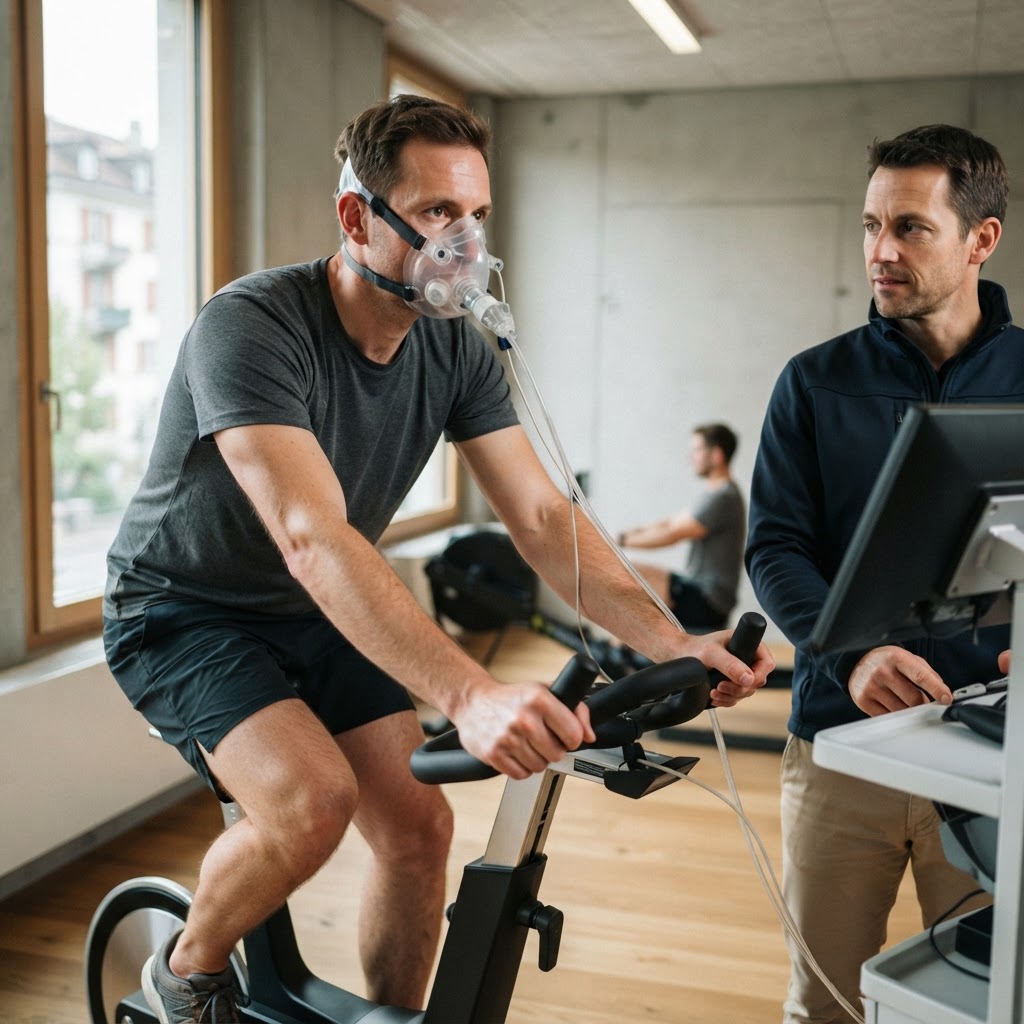
- —VO2max testing: measures your maximum oxygen uptake and thus your endurance performance. A reference value against which cardiovascular training can be precisely aligned.
- —HRV-guided training: heart rate variability serves as an indicator of recovery and training readiness, provided it is interpreted professionally.
- —Functional performance tests: repeatable strength or endurance assessments that place your progress within actual training.
These procedures are not an end in themselves. Their benefit arises only when a qualified team translates the results into a plan and regularly reassesses them.
What the evidence proves and what remains a recommendation
Here a clean separation between established evidence and practical recommendation is worthwhile.
Established: Systematic reviews show that wearable activity trackers can increase physical activity when they are embedded in measures with professional guidance, goal setting and feedback. A meta-analysis in JAMA Network Open is linked to stronger effects among adults with cardiometabolic conditions when the devices are combined with personal support. An umbrella review summarises 39 systematic reviews and shows that wrist-worn wearables with feedback increase activity across various groups.
Less clear-cut: Effects on long-term health markers such as body composition, blood lipids or glucose are, according to Lancet Digital Health and further syntheses, variable and strongly context-dependent. The accuracy of individual measured values, such as calorie consumption or HRV, differs considerably between devices.
Recommendation: Use wearables as a coaching aid, not as the sole basis of your training plan. Pay attention to trends over several days rather than to individual outliers, and have measured values interpreted professionally.
How to check whether a club really uses your data
Measurement technology alone says little. Quality shows in how the results are handled. Therefore check whether the club has a clear process.
- —Is there an initial measurement, an interim check and a follow-up measurement at fixed intervals?
- —Does the team openly explain the limits of the devices to you, rather than over-interpreting every daily value?
- —Do the results flow into a structured Personal training?
- —How is your data stored, who sees it and what use is intended?
Data protection in particular is a mark of quality. A premium offering discloses how your values are handled and ensures professional support.
Anyone working with GLP-1 medications or keeping muscle preservation in mind benefits especially from repeated body analysis. How to protect muscle mass in this context is described in our article on training with GLP-1 and muscle preservation. For format-oriented goals such as in Hyrox training, objective tests also help to document progress cleanly.
How vyvo makes measurement competence comparable
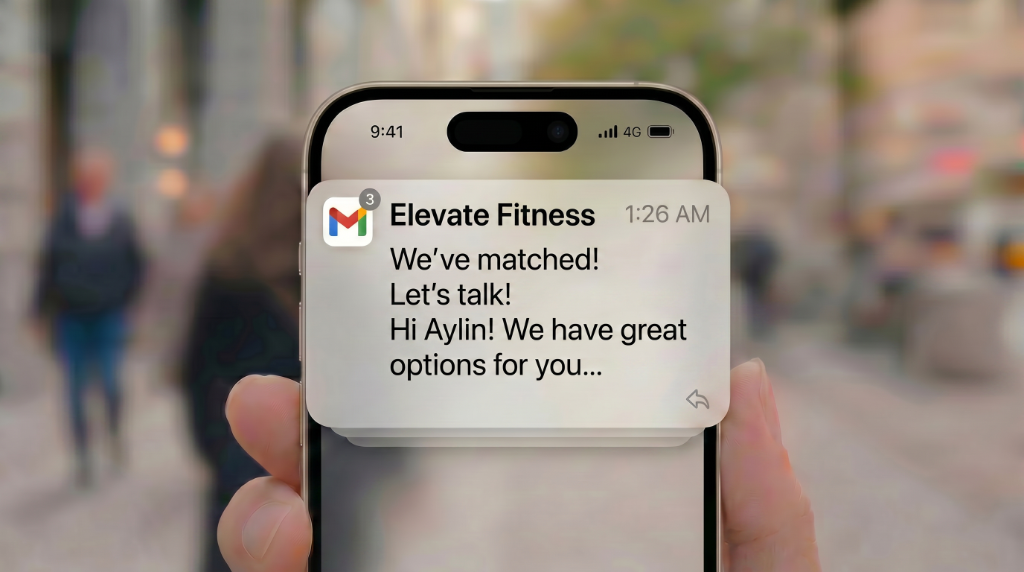
Measurement technology is an equipment feature that can be compared. Through the Match Finder your profile is captured, and suitable clubs reach out to you when their offering fits your goals. This way you do not have to chase after each club yourself.
The vyvo Score compares fitness clubs relative to their own city and category. It does not average across the country. How this value is created is explained in our article How the vyvo Score is calculated.
If you are specifically looking for offerings with InBody, VO2max or DEXA, you can take these criteria into account in the comparison. For a first overview of a specific region, the selection of the best fitness clubs in Zürich helps.
Concrete steps for your decision
Finally, the most important points that you can apply directly.
- —Clarify your goal: body composition, endurance or recovery determine the right test.
- —Ask about the measurement process, not just about the device. Initial and follow-up measurement make the difference.
- —Assess whether the results are translated into a structured Personal training.
- —Have the use of your data explained to you in writing and pay attention to professional support.
- —Compare several clubs on the basis of these criteria, rather than relying on a single figure.
An important note at the end: wearables and tests do not replace medical assessment. If unusual heart rate patterns, chest pain, persistent fatigue or signs of illness or injury appear, you should seek medical advice before major training changes.
With these criteria you find a fitness club that does not merely collect your data, but translates it into real progress. fitness. decided.